Fae · specimen №04
Thufir
Who holds what, in a game built on not knowing.
A companion for the Dune board game that tracks the Treachery deck: what was bid, who holds what, what remains, and the cards nobody has seen.
- Role
- Product design, engineering
- Platform
- Web
- Years
- 2026
- Built with
- Stimulus · Tailwind CSS · Local storage
- Status
- Live
The problem
Dune's Treachery deck is the game's dark matter: a few dozen cards that decide every battle, auctioned face down while six factions bluff about what they're holding. Only Atredies is allowed to take notes, but that's harder to do than it sounds.
The tracking is the edge. Knowing the Lasgun is gone changes how you fight; knowing two Snoopers remain changes what you bid. But a paper crib sheet means looking down, and the negotiation is where the game actually happens.
The approach
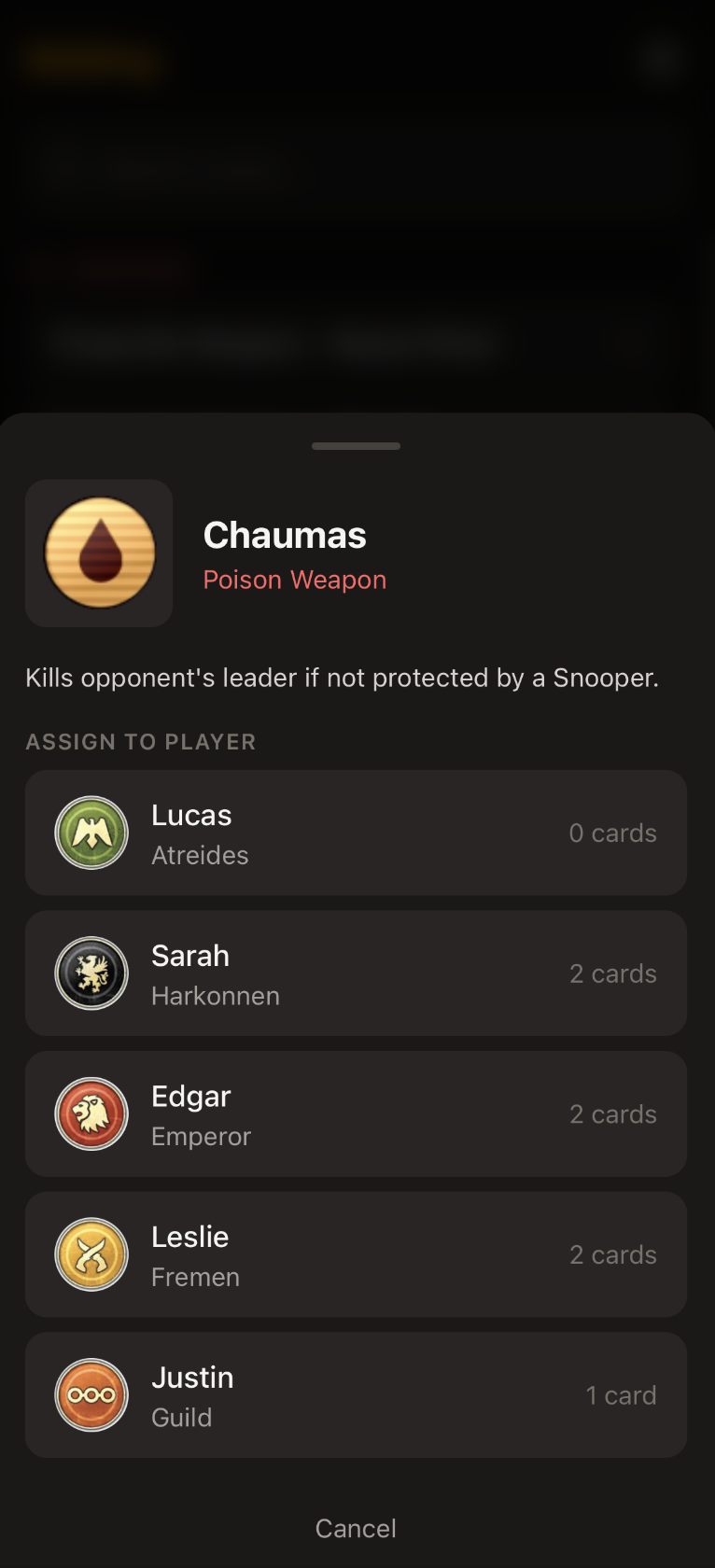
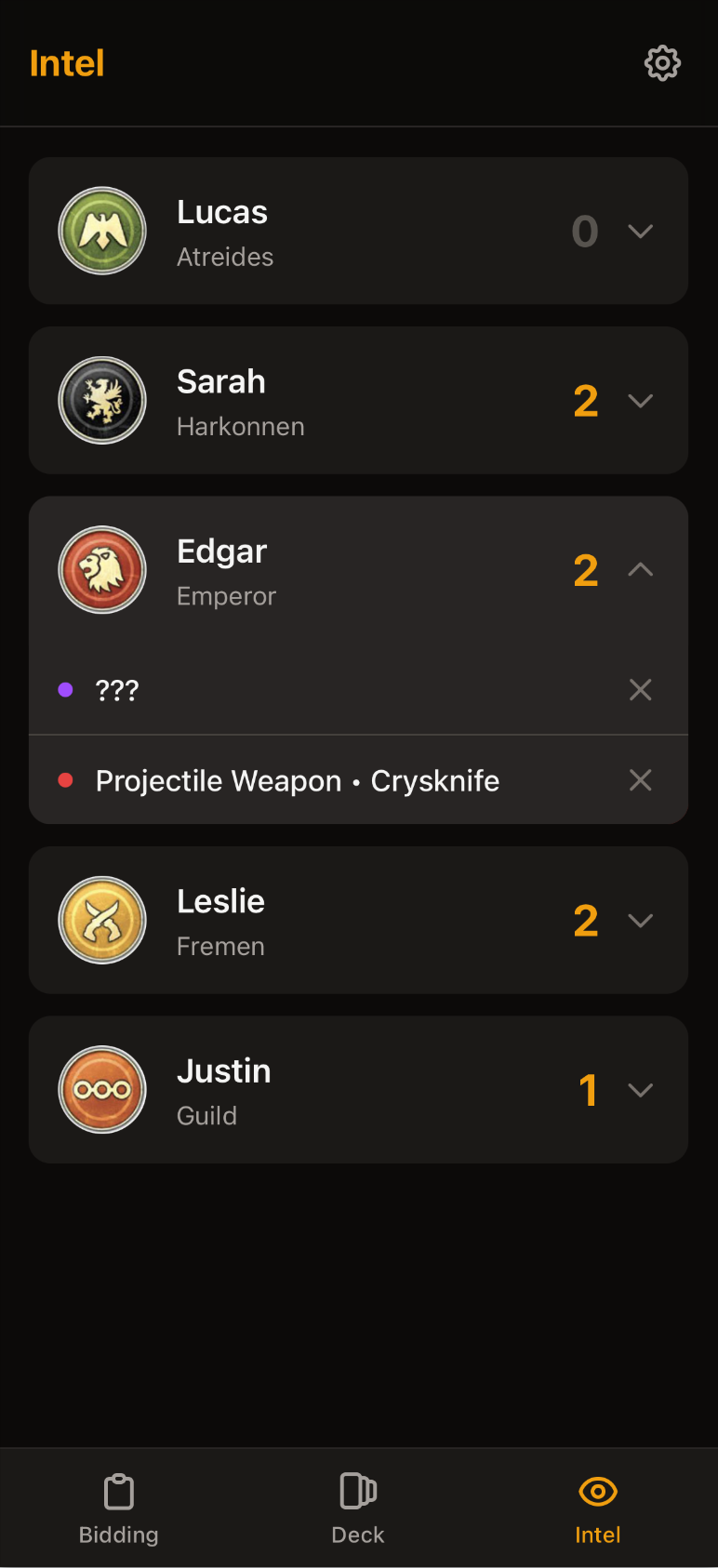
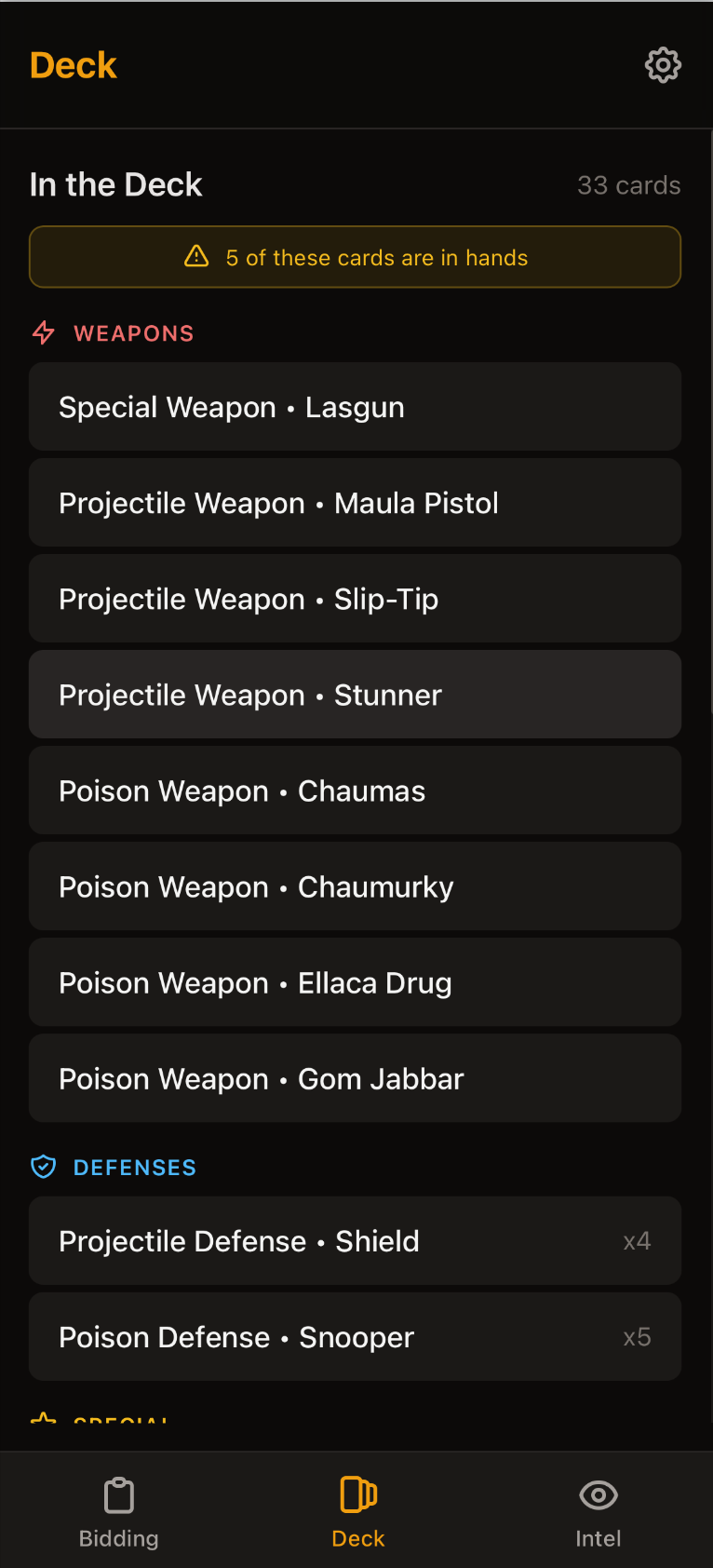
Thufir is a tracker, not a rules engine: three tabs that mirror how the table thinks. Bidding assigns a card to whoever won it. Intel shows every player's known hand. Deck shows what's left, with a warning for cards already in hands.
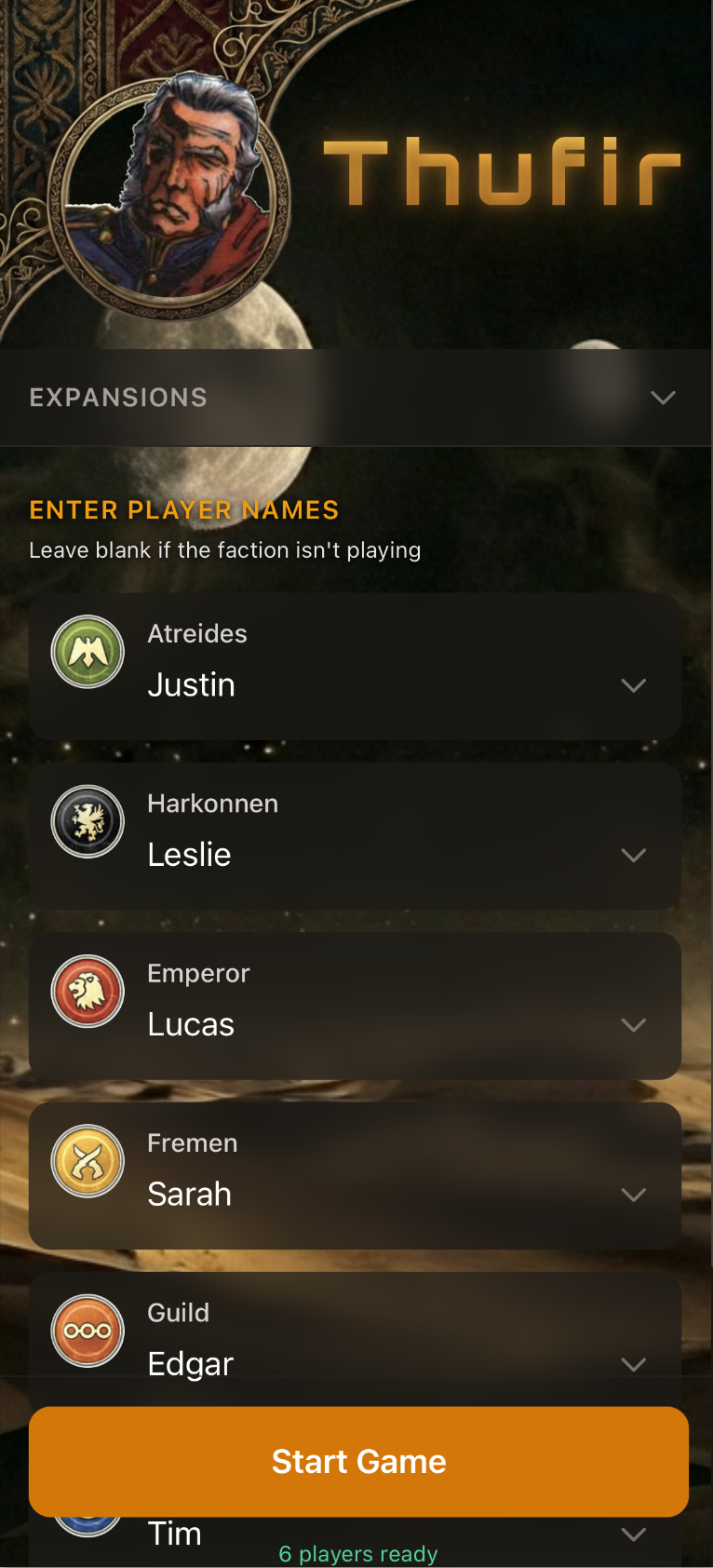
It runs in the browser at thufir.app, built for a phone at a table. Setup is faction rows and first names; leave a faction blank and it isn't playing. The game saves locally and resumes with one tap, and there is no account anywhere.
Decisions that mattered
4 entries
A tracker, not a referee
Thufir never enforces a rule. It remembers what happened and keeps the numbers straight; the arguing stays at the table, where it belongs.
The unknown card is first-class
Harkonnen's extra cards, the ones nobody else has seen, is tracked as an explicit ???. Good intel includes knowing exactly what you don't know.
No account, no server
The whole game lives in the browser and saves using local storage. It is useful immediately, even in the middle of someone else's turn.
Counts over lists
The Deck tab counts down rather than merely listing: how many Snoopers are left matters more mid-auction than what a Snooper does.
What it does
At the table
- Six factions set up with first names; a blank faction sits out
- Bidding: tap the card, tap the winner
- Intel: every known hand, with the hidden card as an explicit ???
- Undo for every action
Under the hood
- Runs in the browser at thufir.app, sized for a phone
- Games save locally and resume with one tap
- Expansion decks toggle at setup
- A feature history published inside the app
Marginalia
Thufir exists because one Dune table needed it. Like the Mentat it is named for, it does the remembering so the humans can scheme.
More figures
From the app