Fae · specimen №06
IV
Four threads, one finger, and your own path as the hazard.
An arcade roguelike about flying four glowing threads in formation with a single finger, threading them through their own wake while a deck of fifty upgrade cards reshapes every run.
- Role
- Game design, engineering
- Platform
- iOS + tvOS
- Years
- 2026
- Built with
- Swift · Metal · UIKit · GameKit
- Status
- In development
The problem
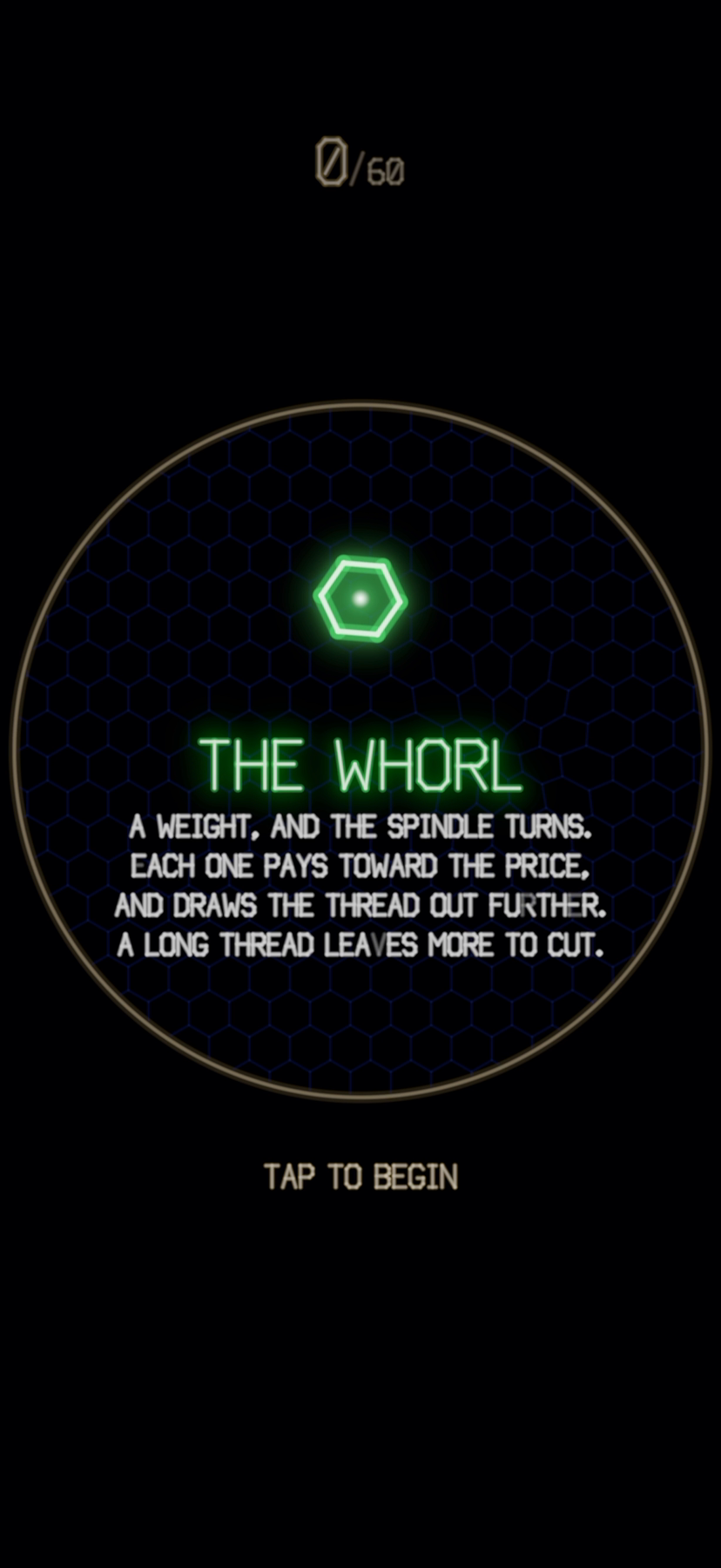
IV began as a question about how much game one input can carry. Four threads fly in formation; a finger anywhere on the screen curves them together; everything they've flown leaves a wall behind. That's the entire control scheme, on a phone or on a TV where a resting thumb on the remote steers.
The hard part is making one verb stay interesting for a hundred levels. Pure arcade games tend to die of sameness: the tenth run feels like the first, only faster.
The approach
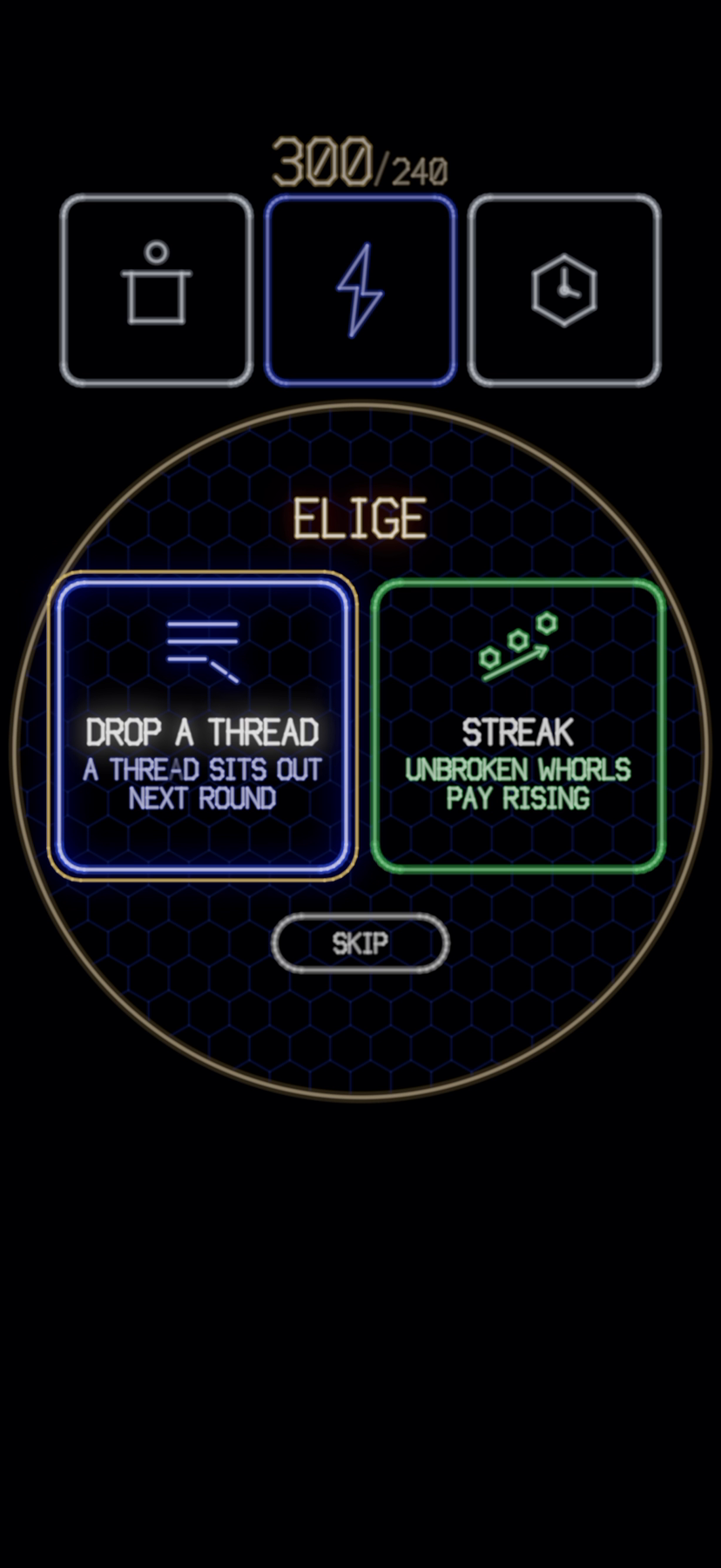
The answer is a roguelike layer over the arcade core. Clearing a level deals a choice of upgrade cards (fifty of them so far, across four rarity tiers), and a run holds only three slots, so a full rack forces an eviction. Runs diverge fast: one becomes a tank, the next a glass cannon.
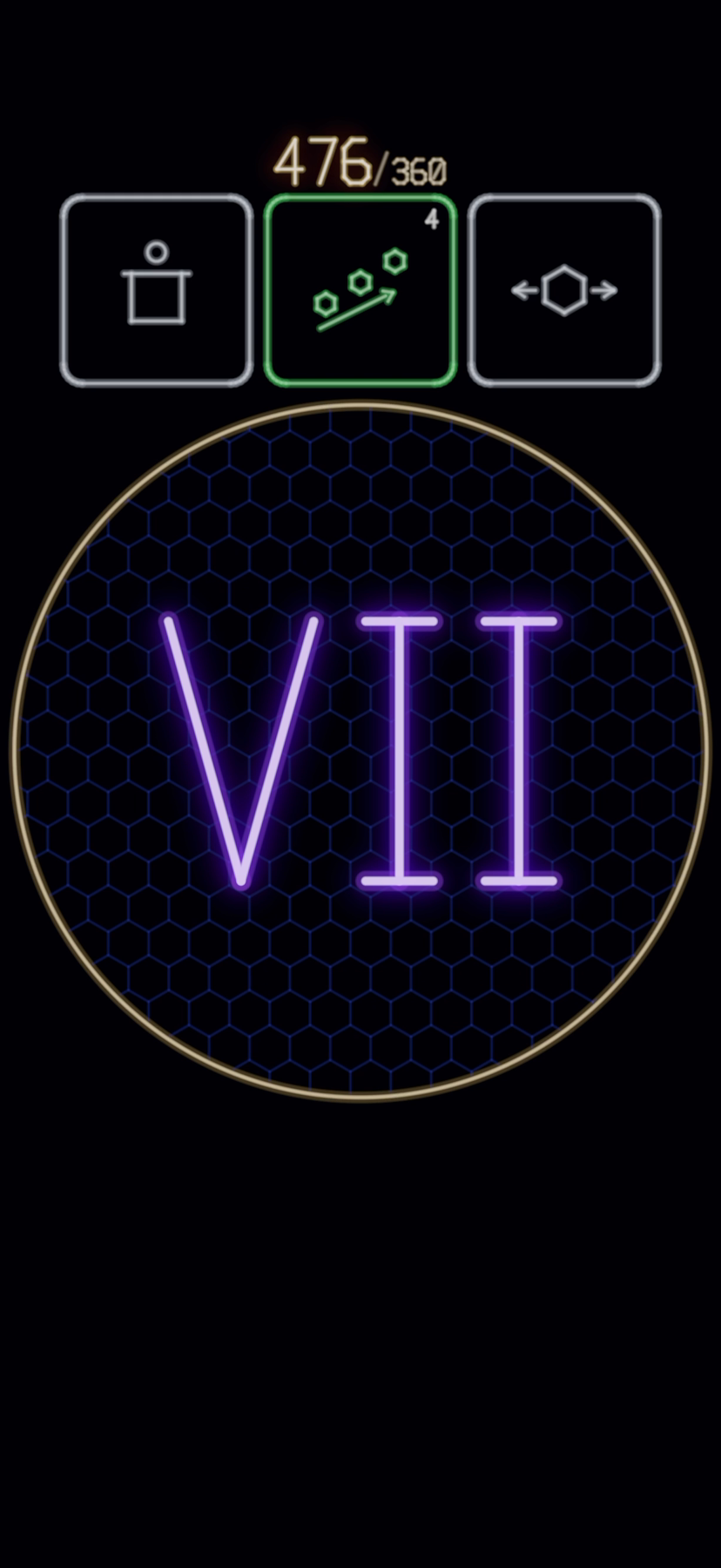
The name is the theme. The four threads are flown by the Fates: Clotho spins, Lachesis measures, Atropos cuts, and Moros, doom itself, arrives last to complete the title. Levels count in roman numerals, and the whole thing is drawn, lit, and sounded in code: a Metal renderer, a hand-built vector font, and a synth that plays the game's events as music.
Decisions that mattered
4 entries
One verb, kept pure
Steering is the only input in the base game. Depth comes from the deck and the geometry, never from more buttons. The skill being tested is threading four symetrical lines through your own wake.
Death is always legible
A crash freezes at the moment of impact and shows exactly which thread hit what. Fast games only earn their difficulty when every death is provably the player's fault.
Everything is synthesized
The renderer, the typeface, and the soundtrack are all code: Metal shaders, a vector font drawn from line segments, and an audio engine that climbs a pentatonic ladder as you collect. Light and sound sputter in lockstep because they ride the same tweens.
The same thread every day
A deterministic generator gives every copy of the game the same seeded run each calendar day, the same clocks, spawns, and deals: one attempt, and a share card to brag about afterwards.
What it does
In the run
- One-finger steering of a four-thread formation
- Timed pickups (whorls, snarls, and snips) that pace every round
- Fifty upgrades in four rarity tiers, three slots, forced evictions
- A kill cam that shows exactly what you hit
Around it
- The Daily Thread: one seeded run a day, identical on every device
- Game Center leaderboards and an achievement ladder
- Plays on iPhone and Apple TV; the Siri Remote steers from a resting thumb
- Synthesized audio and haptics locked to the visuals
Marginalia
IV is in development and unreleased: the core loop, the deck, and the daily run are flying, and the current work is tuning what happens between the pickups.
More figures
From the app